RADIOSHACK RSC-8 Microcomputers Catalog Radio Shack TRS-80
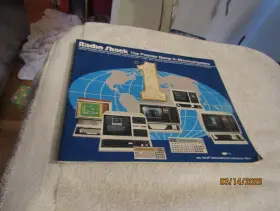
( Brand: Radioshack ), ( Origin: United States ), ( Publication Year: 1983 ), ( Type: Catalog ), ( Format: Booklet ), ( Unit Type: Unit ), ( Language: English ), ( Personalized: No ), ( Features: Illustrated ), ( Manufacturer Part Number: RSC-8 )
Review RADIOSHACK Radio Shack Vintage Microcomputers Catalog No
Introducing the Radio Shack RSC-8 Receiver, a versatile and high-performance radio communication device that was a popular addition to TRS-80 microcomputers in 1983. This compact receiver was designed to provide clear and reliable radio reception for various applications, making it an essential tool for hobbyists, engineers, and communication enthusiasts.
The RSC-8 Receiver features a frequency range of 520 to 1652 MHz, covering the VHF and UHF bands. It comes with a built-in speaker for audible reception and has a sensitivity of -110 dBm, ensuring you can pick up even the weakest signals. The receiver also includes a BFO (Beat Frequency Oscillator) for crystal control, allowing for fine tuning and accurate reception.
This Radio Shack receiver boasts a rugged and durable design, with a metal chassis that protects against interference and electromagnetic radiation. It also includes a convenient front-panel mounting kit for easy integration with your TRS-80 microcomputer or other radio communication systems.
The RSC-8 Receiver's user-friendly interface includes an LED display for signal strength indication, as well as a tuning knob for manual frequency adjustment. It also includes an antenna input, allowing you to connect an external antenna for improved reception in challenging environments.
Whether you're monitoring weather conditions, communicating with other hobbyists, or working on a radio communication project, the Radio Shack RSC-8 Receiver is the ideal companion for your TRS-80 microcomputer. With its impressive frequency range, clear audio, and rugged build quality, this receiver is sure to provide you with reliable and high-quality radio reception for years to come.
The Radio Shack TRS-80 Model RSC-8 microcomputer, introduced in 1983, was a significant advancement in personal computing technology at the time. Here are some pros and cons that might help in deciding whether to buy this model based on the 1983 catalog information:
Pros:1. The TRS-80 Model RSC-8 was a complete system, including a 3.5 MHz Z80A CPU, 16 KB of RAM (expandable to 64 KB), a built-in BASIC interpreter, and a cassette tape drive for data storage and software loading. This self-contained nature made it a popular choice for hobbyists and small businesses.
2. The TRS-80 Model RSC-8 had a user-friendly design, with a built-in keyboard and a simple, easy-to-navigate command set. This made it an excellent choice for those new to computing.
3. A large number of software titles were available for the TRS-80, including productivity applications, games, and educational software. This extensive library offered something for almost every user.
4. The TRS-80 Model RSC-8 had a strong community of users and developers, ensuring a wealth of resources, tutorials, and support materials were readily available.
Cons:1. The TRS-80 Model RSC-8's cassette tape drive was relatively slow compared to modern storage technologies, making data transfer and software loading time-consuming.
2. The TRS-80 Model RSC-8 had limited graphics and sound capabilities, which might not appeal to those looking for a more multimedia-focused computing experience.
3. The TRS-80 Model RSC-8's BASIC interpreter had certain limitations, such as memory management and input/output handling, which could make complex programming tasks more challenging.
4. The TRS-80 Model RSC-8's expansion capabilities were limited compared to later microcomputers, which might hinder its usefulness for advanced users or those with specific hardware requirements.
In conclusion, the Radio Shack TRS-80 Model RSC-8 was a versatile and user-friendly microcomputer that offered a wide range of applications and a strong community of users. Its affordability, ease of use, and extensive software library made it a popular choice for hobbyists and small businesses in the early 1980s. However, its slower data transfer rates, limited graphics and sound capabilities, and limited expansion options may not appeal to more demanding users or those looking for a more multimedia-focused computing experience.
Recommendation:If you are looking for an affordable and user-friendly microcomputer with a rich software library and a strong community of users, the Radio Shack TRS-80 Model RSC-8 might be the right choice for you. However, if you require faster data transfer rates, advanced graphics and sound capabilities, or extensive expansion options, you might want to consider other microcomputers released during or after the 1980s. Ultimately, the decision depends on your specific computing needs and preferences.
Details:
part #: rsc8 prices
- $40.00-$550.00
specifications catalogcrave:
- brand: Radioshack
- origin: United States
- publication year: 1983
- type: Catalog
- format: Booklet
- unit type: Unit
- language: English
- personalized: No
- features: Illustrated
- manufacturer part number: RSC-8
payments catalogcrave:
- wallet: Paypal
- credit card: Visa
- other
offer catalogcrave:
- sold: 0
- quantity: 1
- options: Ship-to-home
- availability: In Stock
- started: March 14, 2026
- best offers: True
general catalogcrave:
- Books Magazines > Catalogs
- condition: Like New
returns catalogcrave:
- method: Money back
- policy: Returns Accepted
- paid by: Buyer
- time: 30 Days
shipping catalogcrave:
- cost: $7.00
- class: Standard
- type: Fixed
- service: USPS Ground Advantage
- transit: 4-10 Days
- carrier: USPS
seller catalogcrave:
- rating: 99.8%
- city: Ballwin, Missouri
- # reviews: 61282
Radioshack RSC-8 Is Similar To:
- Radioshack Catalog-2001 Radio Shack Answers Catalog-2001 First Ever Internet-ready Interactive (32.9% similar) 2001 radio shack answers catalog first ever internet-ready interactive catalog...(June 18th, 2024)

5 offers $40.00–$550.00 USD
- Offer #1 priced at $550.00 + $140.50 delivery = $690.50* total. Shipped with USPS Ground Advantage. Vintage Computer radio shack model 4 microcomputer 64K RAM.+$140.50 shipping
- Offer #2 priced at $40.00 + $12.08 delivery = $52.08* total. I have no way to test with RadioShack computer.+$12.08 shipping
- Offer #3 priced at $119.00 + $0.00 delivery = $119.00* total. Tested and works well!.FREE SHIPPING
- Offer #4 priced at $399.99 + $20.00 delivery = $419.99* total. Great find!.+$20.00 shipping
- Offer #5 priced at $129.99 + $14.92 delivery = $144.91* total. The Vintage RadioShack Pocket Computer is a classic piece of technology that hails from Japan Comes with original Sharp case and 2 rolls of paper for printer.+$14.92 shipping